Insights from Korea’s Education Capital: Why Thinking Matters More Than Prestige
In discussions about education in South Korea, one word never fails to appear: prestige.
Many people still believe that graduating from a top university guarantees a successful career and a stable future. Academic pedigree is often treated as a shortcut to opportunity.
However, Hyun Woo-jin, one of the most influential private education instructors in Korea, offers a different perspective—one that challenges this long-held assumption.
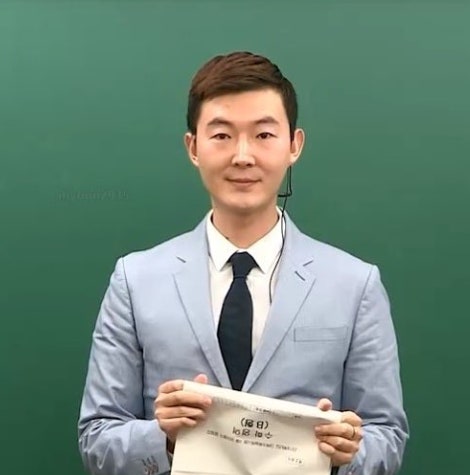
He argues that something far more fundamental than a university name determines long-term success.
1. A Society Where Academic Hierarchies Are Fading
According to Hyun Woo-jin, the rigid hierarchy once represented by elite universities—such as Seoul National University, Yonsei, and Korea University—is gradually losing its influence.
In real professional environments, the value of a school name fades faster than many expect.
Today, the question is no longer
“Which university did you attend?”
but rather,
“What can you actually do right now?”
2. The True Advantage: Thinking Ability
So what surpasses academic prestige?
His answer is simple yet powerful: thinking ability.
Not the ability to solve familiar problems quickly, but the capacity to:
- understand situations,
- analyze structure,
- and generate solutions independently.
This kind of thinking extends far beyond standardized exams. It becomes a lifelong asset—one that proves valuable in workplaces, leadership, and decision-making.
3. Why We Still Cling to Prestige
Despite knowing this, many people continue to obsess over academic credentials.
The reason is both simple and uncomfortable.
The most frightening position is having neither prestige nor real ability.
Before developing genuine competence, academic pedigree often serves as a psychological safety net. It provides access to better environments, networks, and opportunities—advantages that cannot be denied.
4. Prestige as a Tool, Not a Destination
Hyun Woo-jin makes an important distinction.
He does not dismiss elite universities. Instead, he views environment and network as part of one’s overall capability. A strong academic setting offers exposure, stimulation, and access to motivated peers.
However, he draws a clear line:
A school name cannot think on your behalf.
Without independent thought, even graduates from top institutions eventually reach their limits. Meanwhile, individuals with strong thinking ability often rise—regardless of where they began.
5. Education in the Age of AI
This insight becomes even more relevant in the era of artificial intelligence.
As machines increasingly handle memorization and standardized problem-solving, the ability to define problems, interpret complexity, and think creatively becomes more valuable than ever.
In this context, education is no longer about arriving at a prestigious endpoint, but about strengthening one’s capacity to think.
Final Thought
University is not the finish line—it is a training ground.
The real question is not where you studied, but how you learned to think while you were there.
As societies around the world face rapid technological and economic change, this lesson extends far beyond South Korea.
Which do you believe matters more in the long run—prestige or thinking ability?
Share your thoughts.